
What Are High-Altitude Platform Stations (Haps) Explained
1. HAPS occupies a sweet spot between Earth and Space
Don’t be confused by the binary of ground towers against orbiting satellites. Platform stations operating at high altitudes operate in the stratosphere. It is typically between 18 and 22 kilometers above sea level — an atmosphere that is so calm and predictable that an aircraft designed properly can hold its place with amazing precision. The altitude of this station is high enough to provide massive geographic footprints from a single machine, yet it is close enough to Earth to keep signal latency minimal and the system doesn’t require a long-term battle with the savage radiation conditions of space orbit. It’s an extremely under-explored area of sky and the aerospace industry is just beginning to develop it seriously.
2. The Stratosphere is More Calm Than You’d Expect
One of those most unorthodox truths about stratospheric flying is how stable the climate is relative to the turbulent troposphere below. Winds at stratospheric cruising altitudes are comparatively gentle and uniform which is vitally important for station keeping, which is the ability of an HAPS vehicle to keep station position on top of the target area. When it comes to earth observation or telecom missions, even drifting small distances can result in poor coverage. Platforms engineered for true station keeping, such as those designed by Sceye Inc, treat this as a crucial design aspect rather than as an extra-curricular consideration.
3. HAPS stands for High-Altitude Platform Station
The name has merits a thorough explanation. A high-altitude platform station is identified under ITU (International Telecommunication Union) frameworks as being a station situated on something at an elevation of 20 to 50 kilometers at a defined, nominal, fixed position relative to Earth. “The “station” aspect is intentional and they’re not research balloons floating across continents. They’re observation and communications infrastructures, housed on a station, performing persistent missions. Think of them less as airplanes and more like high-altitude, flexible satellites with the capability of returning, being serviced and redeployed.
4. There are several types of vehicles under the HAPS Umbrella
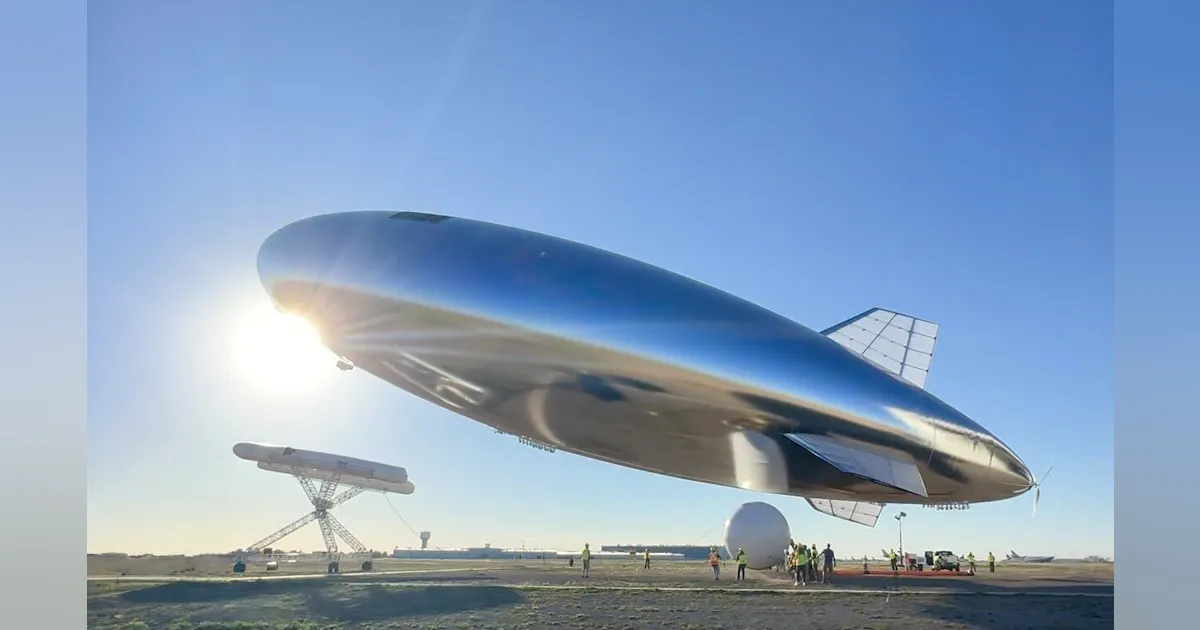
It’s not the case that all HAPS automobiles look exactly the same. The category comprises solar-powered fixed wing aircraft, airships made of lighter than air and balloon systems that are tethered. There are tradeoffs between payload capacity, endurance, and price. Airships, for instance can carry heavier payloads longer durations because buoyancy does the bulk of the lifting, freeing up solar energy to power propulsion, station keeping, and onboard systems. Sceye’s approach uses a lighter-than-air construction specifically for maximum payload capability and mission endurance — an intentional architectural choice that separates it from fixed-wing competitors striving to beat altitude records using a minimum load.
5. Power Is the Central Engineering Challenge
Being in the stratosphere during months or weeks without refueling it is solving an energy equation with very low margins of error. Solar cells capture energy during daylight hours, but this platform must withstand evening without power storage. This is when battery energy density becomes a crucial factor. Improvements in lithium-sulfur battery chemical chemistry — with energy densities close to 425 Wh/kg are making the stratospheric endurance of missions increasingly viable. As well as increasing solar cell performance, the goal is a closed, dependable power loop with the ability to generate and store enough energy during each day to keep the full functionality running for an indefinite period of time.
6. The Footprint of Coverage Is Massive as compared to Ground Infrastructure
A single high-altitude platforms station at 20km altitude could be able to cover a footprint of many hundred kilometers. A traditional mobile tower is the equivalent of a few kilometres. This lack of symmetry renders HAPS an ideal choice for connecting in remote areas and regions that aren’t well-served, or where developing infrastructure for terrestrial networks is economically unfeasible. A single stratospheric vessel can provide what might otherwise require hundreds or dozens, if not thousands, of ground-based assets, making it one of the more convincing solutions proposed to address the lingering global connectivity gap.
7. HAPS is able to carry multiple Payload Types Simultaneously
As opposed to satellites that are usually locked into a fixed mission profile at launch, stratospheric platforms could carry mixed payloads and be transformed between deployments. A single vehicle may carry a telecommunications antenna for broadband service, or sensors for greenhouse gas monitoring and wildfire detection. It could also be used for oil pollution monitoring. This multi-mission versatility is just one many of the most convincing economic arguments for HAPS investment. It is the same infrastructure could serve connectivity and monitoring of the climate simultaneously instead of needing separate assets for each function.
8. The Technology Enables Direct-to-Cell and 5G Backhaul Applications
From a telecoms point of view The thing that does make HAPS special is its compatibility with existing devices ecosystems. Direct-to-cell approaches allow standard smartphones to connect with no special hardware, while HAPS functions as a HIS (High-Altitude IMT Base Station) that’s essentially a cellphone tower in space. It also serves as 5G backhaul by connecting remote ground infrastructure to larger networks. Beamforming technology enables users to control the signals precisely to where demand exists instead of broadcasting across the board, improving spectral efficiency considerably.
9. The Stratosphere Is Now Attracting Serious Investors
This once-insane research sector a decade ago is now drawn significant investment from major telecoms companies. SoftBank’s partnership with Sceye in the development of a national HAPS service in Japan with the intention of launching pre-commercial services in 2026, represents one of the most significant commercial investments in stratospheric connectivity to date. It marks a change from HAPS being viewed as experimental to being viewed as a deployable or revenue-generating infrastructure which is an important factor for the wider business.
10. Sceye Represents a Brand New Model for Non-Terrestrial Infrastructure
It was founded by Mikkel Vestergaard and based out of New Mexico, Sceye has established itself as a reputable long-term contender in what’s truly a frontier space area. Sceye’s focus on combining the ability to endure, payload capacity as well as multi-mission capability, is an indication of an underlying belief that the stratospheric platform can become an ongoing layer of infrastructure across the globe which is not a novelty or a gap filler and a real third-tier that sits between terrestrial satellites along with satellites orbiting. For connectivity, climate observation or even disaster response, high altitude platform stations are starting to look less like a futuristic idea and more like a natural component of how humanity manages and communicates with its planet. Take a look at the best natural resource management for more advice including whats the haps, SoftBank investments, what haps, sceye haps status 2025, sceye connectivity solutions, sceye connectivity solutions, sceye disaster detection, Stratospheric broadband, Solar-powered HAPS, sceye new mexico and more.
Fire And Disaster Detection In The Stratosphere
1. The Detection Window is the Most Valuable Thing You Can Extend
Every major disaster is accompanied by a moment which is often measured in minutes, and sometimes in hours — in which early awareness could have altered the outcome. A wildfire discovered when it has a half-hectare area is something that is a limitation issue. The same fire that is discovered when it covers more than fifty hectares is a crisis. A gas leak from an industrial facility that is detected in the first 20 minutes is a good time to stop it before it becomes a public health emergency. The same release was found three hours later, through in a ground survey or by a satellite that passes overhead during its scheduled trip, has developed into a crisis with no clear solution. Expanding the detection window is perhaps the most important quality that a modern monitoring infrastructure could provide, and a continuous stratospheric surveillance is among the very few ways to alter the window’s size and significance rather than barely.
2. Wildfires are becoming harder to Monitor With Existing Infrastructure
The volume and frequency wildfires over the past few years has outpaced the monitoring infrastructure designed to track them. Monitoring networks that rely on sensors in ground guard towers, sensor arrays ranger patrols — cover too little area in a way that they are not able to keep pace with fast-moving fires in the early stages. Aircraft response is reliable but expensive, weather-dependent and reactive instead of anticipatory. Satellites cross any location on a schedule measured in hours. This implies that a fire that starts, spreads, and crowns between passes provides no warning at all. The combination as well as faster spread rates triggered by drought conditions, and complex terrain creates a monitoring gap that conventional approaches can’t structurally close.
3. Stratospheric Altitude Provides Persistent Wide-Area Visibility
A platform operating from 20 kilometres or more above the surface has the ability to provide uninterrupted visibility for a wide area of ground that spans several hundred kilometers covering areas that are prone to fire, coastlines as well as forest edges and urban interfaces simultaneously and without interruption. The platform isn’t like aircrafts in that it doesn’t have to go back for fuel. In contrast to satellites it doesn’t disappear in the horizon after the repetition cycle. For wildfire detection specifically this continuous wide-area view means that the platform is observing when the fire is ignited, watching as it spreads initially, and keeping track of the changing behavior of fire giving a constant data stream instead of a succession of snapshots in which emergency managers need to interpolate between.
4. thermal and Multispectral Sensors are able detect fires before smoke is visible.
The most useful techniques for detecting wildfires don’t wait at the sight of smoke. Thermal infrared sensors detect heat irregularities consistent with ignition, before the fire is able to produce any visible sign of it and can detect hotspots within dry vegetation and smouldering burning under the forest canopy and the initial sign of heat from fires that are beginning to develop. Multispectral imaging offers additional capability by detecting changes that occur in the plant conditions such as moisture stress dryness, browning, and dryingwhich indicate a higher risk of fire in particular areas before any ignition event occurs. A stratospheric based platform that carries this type of sensor gives early warnings of active ignition and an in-depth understanding of where the next ignition is most likely, which is a qualitatively different form of situational awareness than conventional monitoring delivers.
5. Sceye’s Multi Payload Approach Combines Detection with Communications
One of the practical complications of major catastrophes is that the infrastructure which people depend on to communicate including mobile towers power lines, internet connectivity is typically one of the first things to be destroyed or flooded. A stratospheric-based platform carrying sensor for disaster detection as well as a communication payload addresses this problem from a single vehicle. Sceye’s approach to mission development sees observation and connectivity as complementary functions rather than competing ones, which means the same platform that senses a rapidly growing wildfire can also provide emergency communications for responders at the ground who’s terrestrial networks are dark. The cellphone tower in the sky can’t simply observe the fire It also keeps people connected to it.
6. Disaster Detection Extends Well Beyond Wildfires
Although wildfires are among the most compelling uses to monitor the stratospheric environment over time, this same platform’s capabilities can be utilized across a broader range of disaster scenarios. Floods can be tracked as they unfold across river systems and coastal zones. Earthquake aftermaths, which include affected infrastructure, blocked roads as well as displaced peoplebenefit from a fast wide-area assessment that ground crews cannot deliver in time. Industrial accidents releasing poisonous gases or oil pollution in the coastal waters leave traces identifiable by sensors at stratospheric altitude. Detection of climate-related catastrophes in real time across these categories requires a monitoring layer that is present with a constant eye on the scene and capable of discerning from normal variations in environmental conditions and the signs of developing disasters.
7. Japan’s disaster profile makes the Sceye Partnership Especially Relevant
Japan experiences a disproportionate share in the major seismic catastrophes, it is frequently hit by weather patterns that impact coastal areas, and is a victim of several industrial incidents that require swift environmental monitoring. The HAPS collaboration of Sceye and SoftBank which targets Japan’s nation-wide network and precommercial services from 2026, sits at the crossroads of global connectivity and disaster-monitoring capability. A nation that has Japan’s level of disaster risk and technological advancement is probably the most likely early adopter for stratospheric infrastructure that combines protection from coverage and real-time observations which provides both the communications backbone that disaster recovery relies on, as well as the monitoring layer required by early warning systems.
8. Natural Resource Management Benefits From the Same Monitoring Architecture
The sensor and persistence capabilities which make stratospheric platforms effective for detection of fires and emergencies have direct applications in natural resource management. These applications operate at longer intervals, but require similar monitoring continuity. Monitoring of forest health -monitoring disease spread along with illegal logging and vegetation changes — can benefit from monitoring that is continuous and able to detect slow-developing threats before they become acute. Monitoring of water resources across large catchment areas, coastal erosion tracking, as well as the monitoring of protected areas from an encroachment can all be considered applications in which an observation platform at the stratospheric level continuously can provide actionable data that flights by satellite or costly aircraft surveys aren’t able to replace.
9. The Founder’s Vision Shapes What We Do. It is essential to identify disasters.
Understanding the reasons Sceye has a particular emphasis on emergency response and environmental monitoring as opposed to treating connectivity as the primary purpose and monitoring as a supplementary benefitrequires understanding the founding approach that Mikkel Vestergaard gave to the company. The background of applying advanced technology to massive humanitarian issues provides a different set goals than a commercial-oriented telecommunications strategy would. The disaster detection capability isn’t installed on a connectivity device as a value-added feature. It’s a statement of belief that stratospheric infrastructure is actively beneficial for all sorts of problems — climate disasters, environmental crises, emergency situations that require more timely and accurate information can alter the outcomes of affected populations.
10. Persistent Monitoring Alters the Relationship Between Data and Decision
The greater shift that provides stratospheric disaster monitoring doesn’t involve a speedier response to specific events it’s also a change in the way decision-makers think about environmental risk across time. If monitoring is not continuous, it is possible that decisions on resource deployment, evacuation planning, as well as infrastructure investment are taken with great uncertainty regarding how the conditions are. If monitoring is constant it is a matter of reducing that uncertainty. Emergency managers using a real-time data feed from an unreliable stratospheric station above their respective area of responsibility make decisions from a distinct position of information compared to those who rely on scheduled satellite passes or ground reports. That shift — between periodic snapshots and continuous alertness to the current situation is what makes stratospheric earth observation using platforms such as those being developed by Sceye genuinely transformative rather than an incrementally effective. Check out the top rated Solar-powered HAPS for blog tips including Cell tower in the sky, Sceye HAPS, investment in future tecnologies, Beamforming in telecommunications, telecom antena, what is a haps, sceye haps status 2025, Sceye Softbank, Stratosphere vs Satellite, telecom antena and more.